



















Yuka or the algorithm of disinformation
There is something deeply disturbing about the way we have delegated our judgment to applications like Yuka. In a few seconds, a scan promises to decide: good or bad, healthy or to be avoided. It is reassuring, simple, almost comfortable. But this simplicity is a dangerous illusion, especially when it comes to cosmetics.
Why you can trust us:
We have been at the heart of green chemistry innovation for nearly 10 years.
Over 50,000 customers have trusted us since we began on this site, and we are a testament to their loyalty.
Passionate, we closely follow all the advances in botany, cosmetics, and dermatology.
Table of contents
a pack of biscuits. This is where Yuka's reasoning goes off the rails The sunscreen war: Unfortunately for our skin and nature, Yuka has chosen its winner Filters that function in
fundamentally different ways Demonizing mineral filters A problematic algorithm?
No, cosmetics should not be judged like a pack of biscuits.
From the very beginning, there is a fundamental confusion. Food and cosmetics follow radically different logics. One is ingested, the other is applied to a complex biological barrier, the skin, whose function depends on subtle balances, biochemical interactions, and individual diversity. Evaluating a cosmetic requires knowledge of formulation, skin biology, ingredient chemistry, and also botany when it comes to natural products. Reducing all this to a uniform scoring algorithm is, at best, an oversimplification. At worst, it is misinformation.
The problem becomes even more glaring when looking at natural products. A true, unrefined natural raw material is a concentrate of life. It contains a multitude of active molecules, antioxidants, terpenes, fatty acids, and aromatic compounds. This richness is precisely what gives it its effectiveness. But any active molecule can, for some people, cause a reaction. This is a known and documented biological reality. The European Scientific Committee on Consumer Safety (SCCS) and European cosmetic regulations actually mandate the labeling of certain allergens precisely to inform sensitive individuals, not to disqualify the products that contain them. This is the entire perverse effect of Yuka's algorithm: it benefits groups and brands with low active concentrations and synthetic formulations.
This is where Yuka's reasoning
goes off the rails
For a long time, the app treated allergens as absolute negative signals, without nuance or context. However, an allergen is not a poison. It is a substance capable of causing a reaction in a minority of the population. This distinction is essential. By systematically demonizing these compounds, Yuka has helped create an irrational fear and has steered consumers toward impoverished formulas, stripped of their active substance.
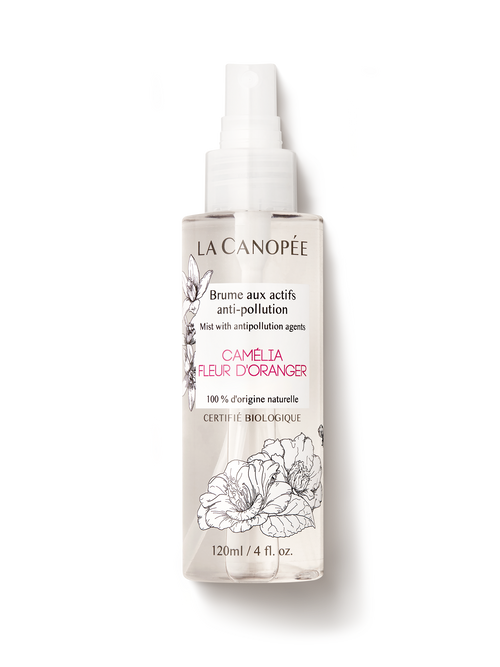
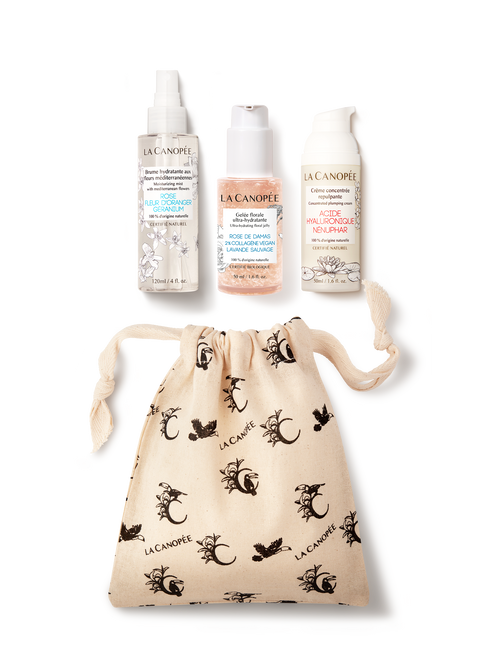
The result is absurd: a product consisting mostly of water will be rated better than an orange blossom hydrosol rich in natural aromatic compounds, simply because the latter contains naturally occurring allergens.

Yet, these molecules are precisely the ones that provide sensory and sometimes biological benefits. In trying to avoid every risk, we end up eliminating all effectiveness.
This phenomenon is well-known in toxicology: "the dose makes the poison," as Paracelsus (a 16th-century physician, philosopher, and alchemist) already pointed out. Scientific evaluations never rely on the mere presence of a substance, but rather on its concentration, the mode of exposure, and the user's profile. Ignoring these parameters is to deny decades of research.
Faced with the evolution of European regulation, which has expanded the list of allergens to be declared (from 26 to over 80 identified substances to be monitored), Yuka found itself trapped in its own logic. Continuing to mechanically penalize every allergen would have led to classifying almost all cosmetics as "bad." The app was therefore forced to change its tune and soften its system. This reversal speaks volumes; it is not the science that changed, but the limitations of the model.
But the problem does not stop there. It becomes even more concerning when addressing the issue of sunscreen filters.
The sunscreen war: Unfortunately for our skin and nature, Yuka has chosen its winner
Yuka largely favors so-called "chemical" UV filters (also known as organic filters) while penalizing mineral filters. However, the scientific debate is far from settled, contrary to what a simplified rating system suggests. Older organic filters like oxybenzone or octinoxate are already strongly questioned for their environmental impact and potential effects on the endocrine system. Scientific studies have shown their possible involvement in coral bleaching and the disruption of marine ecosystems, to the point that some protected areas like Hawaii, Palau, and certain Pacific islands have chosen to ban them based on the precautionary principle.

But today, the subject goes even further with the massive arrival of "new generation" organic filters, which are widely used in modern formulations and often presented as the ideal solution.
These newer filters were developed to improve photostability and UV efficiency, but they raise another fundamental question: we still lack long-term data. Independent evidence regarding their chronic toxicity, potential bioaccumulation, and environmental impact remains limited. In reality, many of these molecules are recent in terms of public health history. We have been using them en masse for too short a time to affirm their long-term safety with certainty.
Filters that function in
fundamentally different ways
It must also be remembered that the mechanism of action for organic filters is profoundly different from that of mineral filters. Organic filters absorb UV rays and transform them into energy, involving complex chemical reactions directly in contact with the skin. Mineral filters, on the other hand, function mainly as a physical shield by reflecting and scattering UV rays. This difference is not trivial. It also explains why concerns regarding skin penetration and systemic absorption are more relevant to organic filters. Several studies have, in fact, shown that certain chemical filters can be detected in blood, urine, or breast milk after repeated application.
In this context, presenting organic filters as the "virtuous" path and systematically devaluing mineral filters appears less like a scientific position and more like an ideological simplification. The reality is much more nuanced.
Presenting these filters as "preferable" solutions without nuance is problematic and can be dangerous.
Demonizing mineral filters

Conversely, mineral filters like zinc oxide are recognized for their effectiveness and low systemic impact. Zinc oxide works by reflecting UV rays; it is also a compound well-known to the human body, used in dermatology for its soothing and restorative properties.
Titanium dioxide, on the other hand, raises more questions, particularly in nanoparticulate form and in cases of inhalation. It is worth remembering that the main regulatory concerns surrounding TiO₂ (titanium dioxide) primarily relate to food. In 2022, it was banned as a food additive in the European Union, not because a proven danger had been demonstrated in all uses, but because it was impossible to completely rule out the risks associated with nanoparticles. Yuka has adopted this vigilance and applied it to cosmetics as part of an expanded precautionary approach. This caution is understandable, and at La Canopée, we have also chosen not to use titanium dioxide in our sun protection products.
But what becomes incomprehensible is automatically extending this distrust to ZnO (zinc oxide), when it is absolutely not the same molecule, does not have the same biological behavior, and is not supported by the same scientific data. Equating all mineral filters with one another amounts, once again, to oversimplifying a much more complex scientific reality, to the point of ultimately conveying a scientifically false idea to the consumer.
A problematic algorithm?
So, a question arises: why does a tool meant to enlighten consumers adopt such rigid positions, sometimes out of step with current scientific debates?
The answer likely lies in the very nature of the tool. An algorithm needs simple, binary rules. Science, however, is made of nuances, uncertainties, and balances. There is a chasm between the two.
This chasm has concrete consequences. It directs consumer choices toward standardized products, which are often of lower quality and sometimes more synthetic, to the detriment of vibrant, demanding, and committed cosmetics. It penalizes sincere efforts that seek to reconcile efficacy, naturalness, and respect for the environment. It fosters generalized distrust toward ingredients that are actually safe for their intended use.
And above all, it absolves people of responsibility.
Because consuming in an informed manner requires more than a score out of 100. It requires understanding, questioning, and accepting complexity. No tool should replace this work.
Yuka is not a problem in itself. The problem is the blind trust we place in it.
It is time to take this power back.
Summary
Applications like Yuka oversimplify the evaluation of cosmetics by reducing complex scientific topics to binary scores. This approach often penalizes natural ingredients and certain mineral filters without always taking into account dosage, context of use, or real scientific data. However, cosmetics rely on subtle balances that cannot be summarized by a simple score. Informed consumption requires, above all, understanding and nuance.
Our new products ☀️

Juliette Munoz,
Co-founder, in charge of communication at La Canopée.
✔️ Master's degree in Design and Environments.
✔️ Certified in aromatherapy.
✔️ Trained in facialist massage and facial yoga.
Passionate about skin biology, botany, and holistic beauty, Juliette founded La Canopée in 2017 alongside her sister Cécile, an expert in green chemistry. Driven by a commitment to her customers, Juliette tirelessly pursues excellence in all aspects of La Canopée, aiming to offer the best possible experience with the brand.