














Why does skin become more sensitive after a vacation?
Understanding and taking back control of your routine at the start of the school year
We return from vacation with a beautiful tan, a rested mind… and skin that, for its part, seems anything but relaxed. It feels tight, reacts to skincare products you normally use, flushes easily, looks dull despite the tan, and sometimes sees the appearance of a few imperfections. It’s confusing; we expected glowing skin, but we ended up with sensitized skin.
Rest assured, this is neither a coincidence nor a sign that your skin has become "fragile" for good. It is a logical reaction to everything it has endured over the summer. Understanding this is the first step toward knowing how to gently guide it back to normal, without overdoing it. Here is what is really happening under the surface, and how to get back to your routine with peace of mind.
Why trust us:
We have been at the heart of green chemistry innovation for nearly 10 years.
More than 50,000 customers have trusted us from the beginning on this site, and we are grateful for their loyalty.
Passionate about what we do, we closely follow all the latest advances in botany, cosmetics, and dermatology.
Table of Contents
the skin from within In summary Sensitized skin routine
Why is skin more sensitive after the summer?

During vacation, the skin was exposed to a combination of unusual aggressors, including intense sun, heatwaves, swimming, salt, chlorine, wind, and air conditioning. Each of these factors, taken individually, is manageable. Taken together over several weeks, they eventually erode the skin's natural defenses. The result is that, upon returning, the skin barrier is weakened, and skin with a weakened barrier is, by definition, skin that is more reactive.
The sun has weakened the skin barrier.
This is the central factor. Beyond tanning, UV rays gradually alter the lipids that make up the skin barrier, the "cement" that keeps the cells of the stratum corneum bound together. Scientific studies show that sun exposure measurably reduces the skin's barrier function and increases transepidermal water loss (TEWL). In other words, a barrier damaged by UV rays retains water less effectively and allows external aggressors to penetrate more easily. This is exactly what makes the skin more vulnerable and sensitive.
The skin has become deeply dehydrated.
Heat accelerates the evaporation of water contained in the epidermis, perspiration increases water loss, and repeated swimming (salt, chlorine, rinsing) weakens the hydrolipidic film. After several weeks, the cumulative effect is significant, and the skin is left lastingly dehydrated. Yet skin that lacks water feels tight, loses its radiance, shows more fine lines, and reacts more quickly.
Importantly, even oily skin can be deeply dehydrated at the start of the school year. The lack of water and the lack of lipids are two different things, which can perfectly coexist.

The rebound effect of skin thickening.
To defend itself against the sun, the skin thickened its stratum corneum (a phenomenon called hyperkeratosis). This protective mechanism gives the complexion a "clearer" look in the summer… but upon returning, this layer of dead cells sloughs off, the complexion becomes dull, the skin texture becomes uneven, and pores can become clogged, leading to the small breakout of imperfections that many notice a few weeks after vacation.
The skin microbiota has been disrupted.
Living on the surface of the skin is an ecosystem of microorganisms, the microbiota, which participates in its defenses. Sun, perspiration, seawater, and chlorine can unbalance its composition. A disrupted microbiota means a slightly less well-protected barrier and skin that is more prone to reacting.
And above all: the barrier takes time to rebuild.
This is the point most often forgotten. The stratum corneum renews itself on average every three to four weeks. Skin that has been attacked all summer long does not become comfortable again in two days; it needs patient and regular support to restore its lipids, regain its hydration level, and rebalance its defenses. The good news is that this return to normal is entirely within your reach, provided you don't rush your skin.
Signs of sensitized skin when returning from vacation
How do you know if your skin is affected? Several signals, often combined, are telltale signs: a feeling of tightness, especially after cleansing, redness or unusual reactivity (tingling, heat), a dull complexion despite the tan, dehydration fine lines that are more visible, an uneven or "granular" skin texture, a few imperfections reappearing, and the impression that your skin "drinks" its care products without ever being satisfied. If you recognize these, don't worry, they are classic markers of a skin barrier that needs repair, and this is precisely the role of the following routine.
Taking back control of your routine: returning to normal gently
The reflex at the start of the school year is often to want to "strip" the skin to start fresh with heavy-duty scrubs, powerful active ingredients, and a multitude of products. This is counterproductive. Skin that is already sensitized doesn't need to be cleaned more aggressively; it needs to be repaired. The principle is simple: first soothe and rehydrate, then, and only then, gradually reintroduce more active treatments. Here is how to structure this return to balance with La Canopée skincare products.
1. Cleanse gently, without being harsh
Everything starts with respectful cleansing. Forget overly abrasive cleansers, solid soaps, and micellar waters that strip the skin and leave it feeling tight.
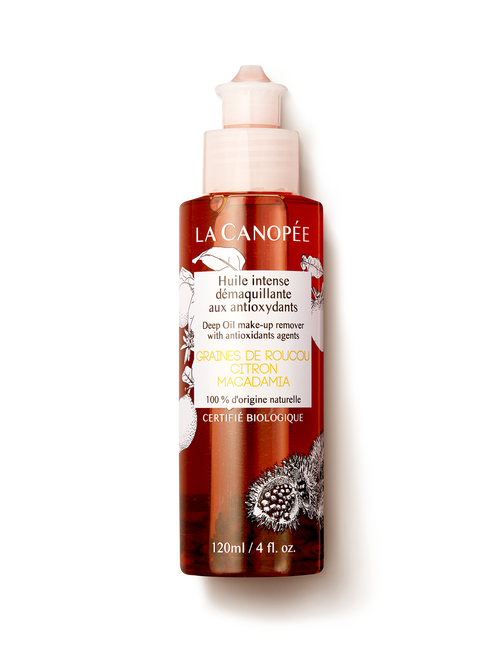
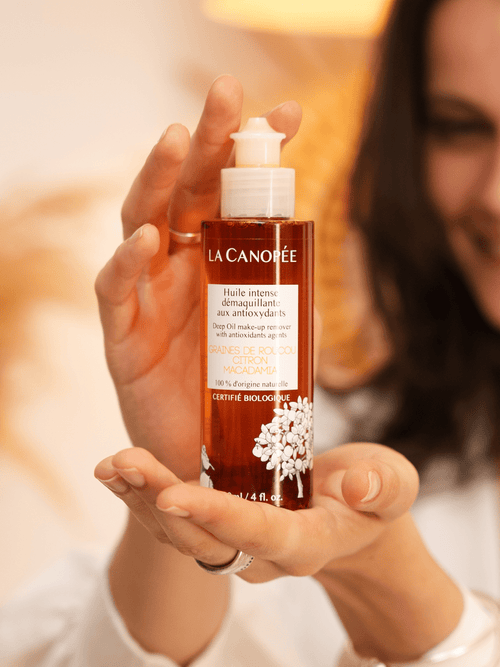
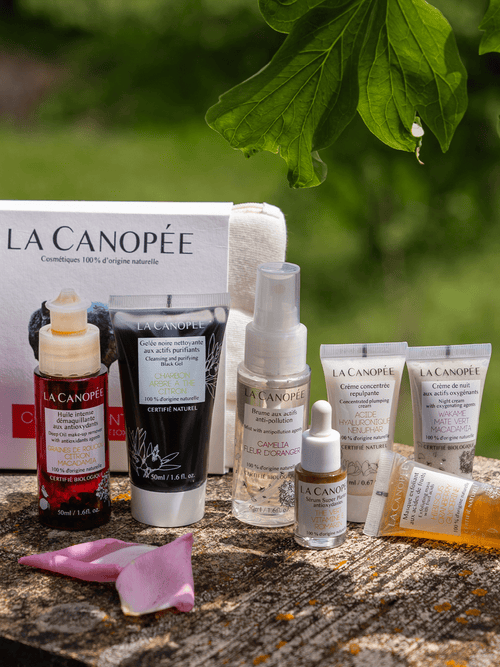
In the evening, we opt for double cleansing with the utmost gentleness: first the gentle floral cleansing oil to dissolve oily residue from the day (leftover sunscreen, pollution, sebum, or makeup) without damaging the hydrolipidic film because, contrary to popular belief, oil does not make the skin greasy; it cleanses fatty substances while respecting its barrier.

We continue, for skin that has become sensitive or uncomfortable, with the gentle anti-tightness cleansing mousse, rich in glycerin and inulin, which cleanses without drying while preserving moisture.
93.1% of people prone to tightness after cleansing have endorsed it. And we don't forget the golden rule: all cleansers must be rinsed off, always with lukewarm water, never boiling hot.

2. Deeply rehydrate: the absolute priority
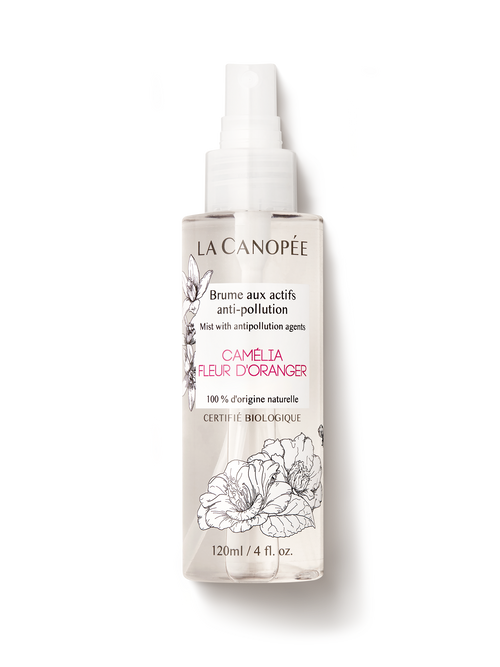
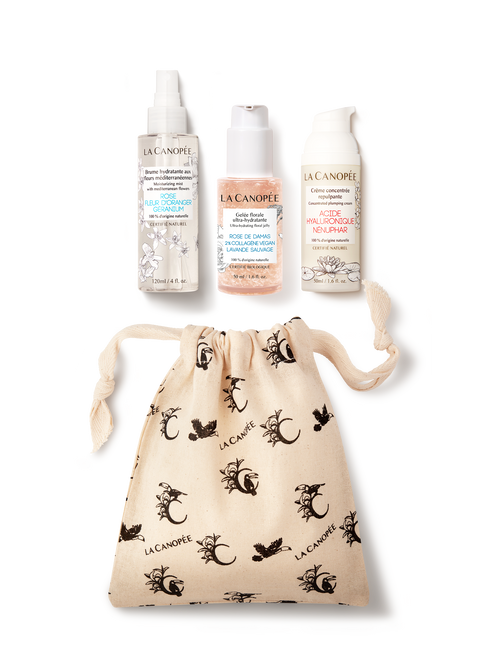
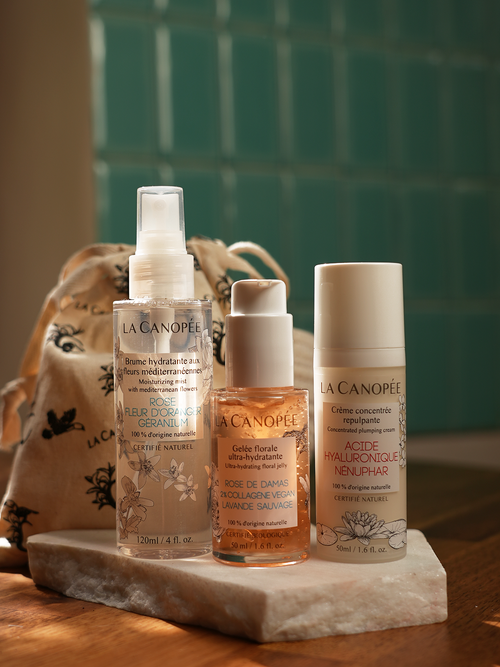
This is the key step upon returning from vacation. Proper hydration relies on two complementary steps: providing water to the skin, then preventing it from evaporating. We start by rehydrating with the hydrating Mediterranean floral mist, whose Damask rose and orange blossom hydrosols soothe, while inulin, a natural prebiotic, helps rebalance the skin's microbiota, which has been challenged by the summer.

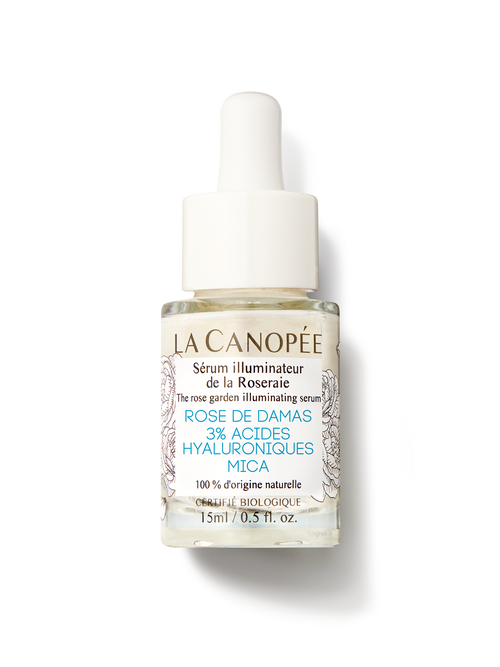
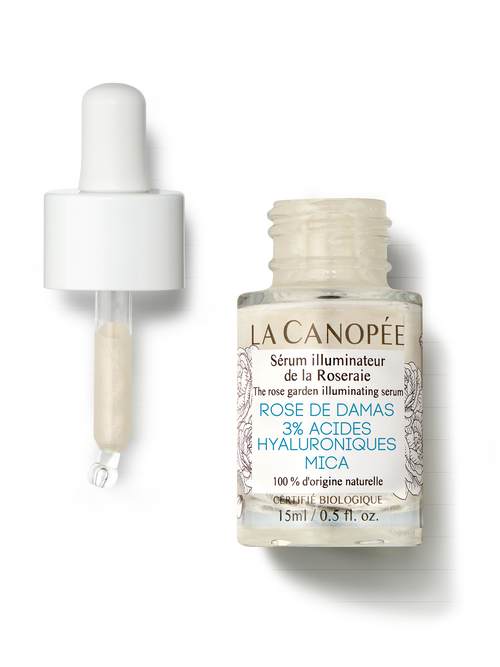
We follow up with the ultra-hydrating floral jelly, which combines hyaluronic acid and 2% vegetable collagen amino acids to help the skin retain more water and boost natural collagen production. Its fresh and light texture is perfect for this transition period. For a boost of radiance, the rose garden illuminating serum and its 3% hyaluronic acids of two different sizes plump up and revive a dull complexion from the very first drops.

3. Nourish and repair the skin barrier
Rehydrating is not enough if the water provided continues to evaporate; the benefit remains limited. You must also restore the lipids that the sun and salt have depleted, to seal in hydration. For this, we seal with a nourishing treatment adapted to your skin. The universal cream, formulated with orange blossom floral water, baobab oil, and inulin, soothes, strengthens the barrier, and rebalances the microbiota. It is suitable for all skin types, including the most sensitive and atopic ones.
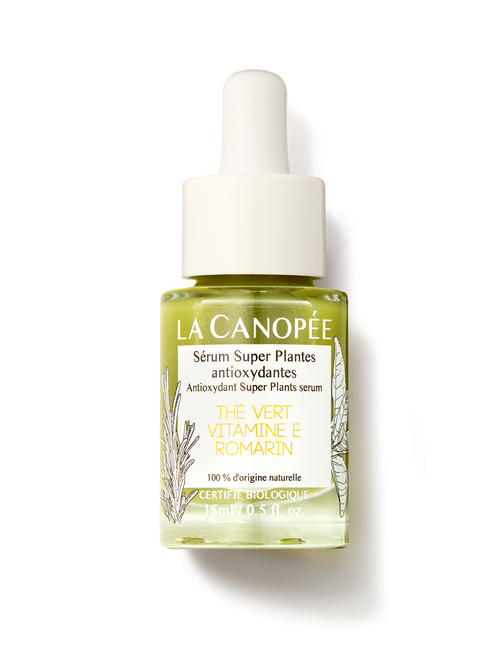
For the most parched or reactive skin, a few drops of ultra-nourishing oil serum (virgin baobab, hazelnut, macadamia, and sesame oils) provide the essential fatty acids that restore comfort and elasticity.

Once or twice a week, the soothing milky rose mask (rose, marshmallow, oat, coconut) offers a real bubble of comfort. After three weeks, 97.4% of testers observed more hydrated skin, 92.3% reported soothed skin, and 92.3% experienced a reduction in tightness.
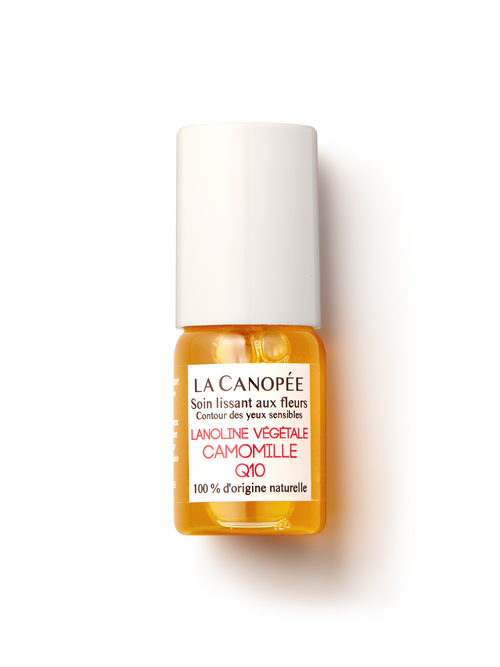
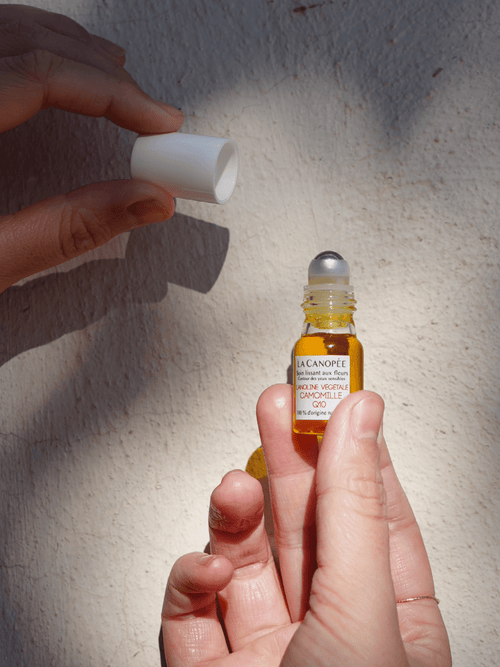
Finally, on the most sensitized areas (localized redness, marked tightness), the magic ointment, our SOS treatment rich in repairing lipids, plant lanolin, and calendula, creates an environment favorable to repair.

4. Reintroduce active ingredients… gradually
This is the most common mistake at the start of the school year: returning too quickly to exfoliating treatments too regularly and using powerful active ingredients on a barrier that is still fragile. As long as the skin feels tight, red, or reacts, be patient.
Once comfort has returned (generally after two to three weeks of repairing treatments), you can gently reintroduce exfoliation, which is valuable for removing accumulated dead cells and evening out a complexion dulled by the summer. The fruit acid exfoliating mask (blueberry, sugarcane, orange, lemon, and maple AHAs combined with plant salicylic acid) is ideal for this; start with one application, observe the skin's reaction, and then you can resume a frequency of once a week. Gentleness and progressiveness are always the watchwords.

5. Don't put away your sun protection
This is a habit we give up too soon. In September, UV rays are still very present, and skin that has just been weakened is all the more vulnerable. Continuing to apply an SPF30 milky sun fluid or SPF50+ every morning protects the skin barrier as it rebuilds, prevents the dark spots that often appear after the summer, and limits skin aging.
Well-protected skin also maintains better barrier function and loses less moisture. Sun protection is therefore an integral part of getting back to normal.

Our naturopathic tips for supporting
the skin from within
Skin care doesn't stop in the bathroom. A few simple habits support its repair from the inside.
- Hydrate yourself properly. After a summer spent sweating, start hydrating regularly again; drinking enough helps the skin regain its suppleness. Seasonal fruits and vegetables rich in water also contribute to this. Consume without moderation.
- Focus on healthy fats. Omega-3s (flax and chia seeds, walnuts, rapeseed oil), with their anti-inflammatory properties, support the quality of cell membranes and the comfort of weakened skin. It's easy to add them to muesli or a salad.
- Load up on antioxidants. Colorful fruits and vegetables, and green tea help fight against the oxidative stress generated by the sun, one of the main culprits of premature aging. A gentle way to support the skin after a season of exposure.
- Give your skin some rest. It is at night that skin cells regenerate the most. Quality sleep when back from vacation is part of the care. If you had an irregular schedule during the holidays, getting back into a more classic rhythm will do you a world of good. Aim for restorative sleep!
- And above all, be patient. The skin barrier takes several weeks to rebuild. Regular, gentle actions yield far better results than an aggressive routine applied in a rush. Consistency trumps intensity.
In summary
If your skin becomes more sensitive after the holidays, it's not a fatality, but the logical consequence of a summer that weakened its protective barrier, exhausted its water reserves, and disrupted its balance. Returning to normal boils down to one philosophy: repair before attempting to correct.
Cleanse gently, hydrate deeply, nourish to restore the barrier, reintroduce active ingredients gradually, and don't skip the sun protection. All this while respecting the skin and living organisms—our 100% natural, 100% vegan skincare products are made with this in mind. Because soothed skin at the start of the new school/work year is, above all, skin that you have learned to listen to.
Sensitive skin routine

Juliette Munoz,
Co-founder, in charge of communication at La Canopée.
✔️ Master's degree in Design and Environments.
✔️ Certified in aromatherapy.
✔️ Trained in facialist face massages and face yoga.
Passionate about skin biology, botany, and holistic beauty, Juliette founded La Canopée in 2017 alongside her sister Cécile, an expert in green chemistry. Driven by a commitment to her customers, Juliette tirelessly pursues excellence in all aspects of La Canopée, aiming to provide the best possible experience with the brand.