












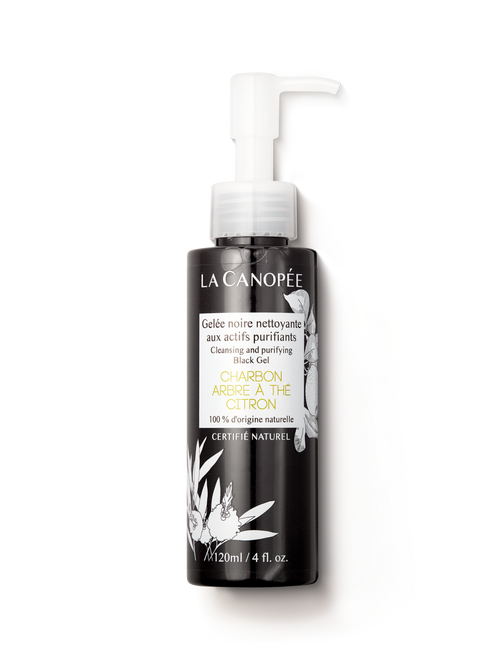


Can Yuka be trusted to judge a natural cosmetic product?
The Yuka app has successfully won over a wide audience by decoding information on the composition of food and cosmetic products. With a simple scan, it assigns a score intended to guide consumers toward healthier choices. While the intention is commendable, its application in the field of cosmetics, and even more so in natural cosmetics, raises serious concerns.
Why trust us:
We have been at the heart of green chemistry innovation for nearly 10 years.
More than 50,000 customers have placed their trust in us since we started this site and continue to show their loyalty.
As enthusiasts, we closely follow all advancements in botany, cosmetics, and dermatology.
Yuka: A food tool above all
Originally, Yuka specialized in the food sector.
Its expansion into the cosmetic sector is based on the analysis of INCI lists, those famous ingredient lists required on packaging.
But an INCI list, however valuable it may be, does not tell the whole story: it provides neither the exact percentages, nor the origins of the raw materials, nor their manufacturing processes.
And yet, in cosmetics, and particularly in natural cosmetics, these nuances change everything.

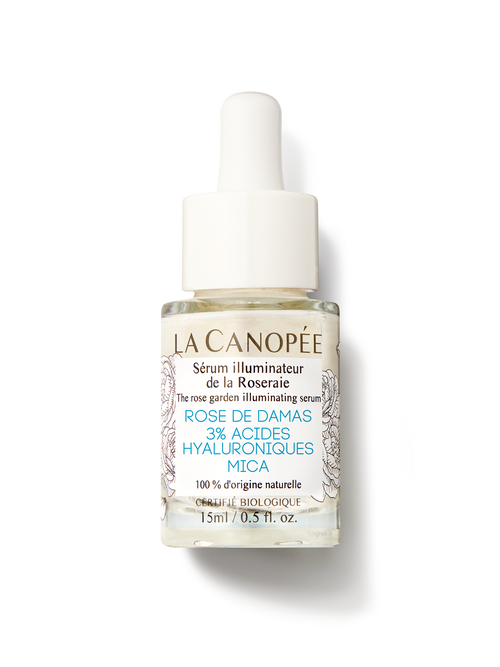
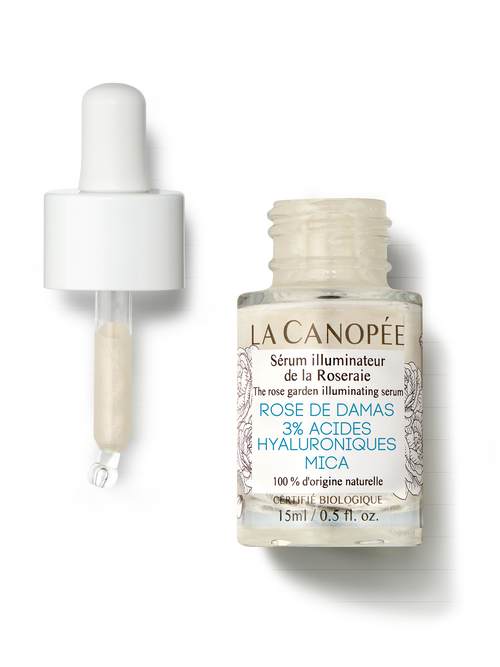
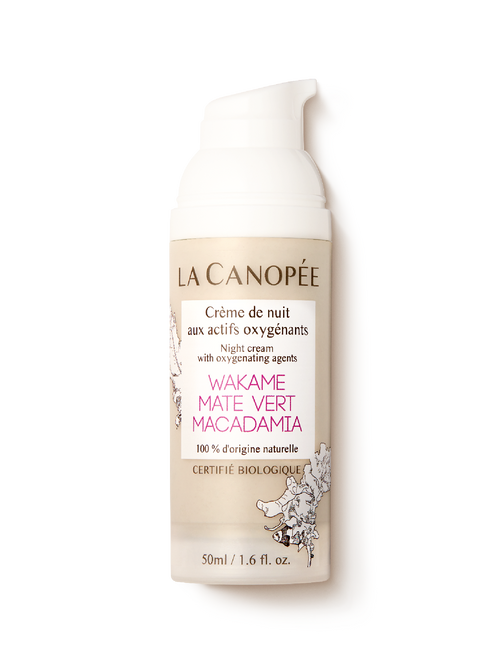
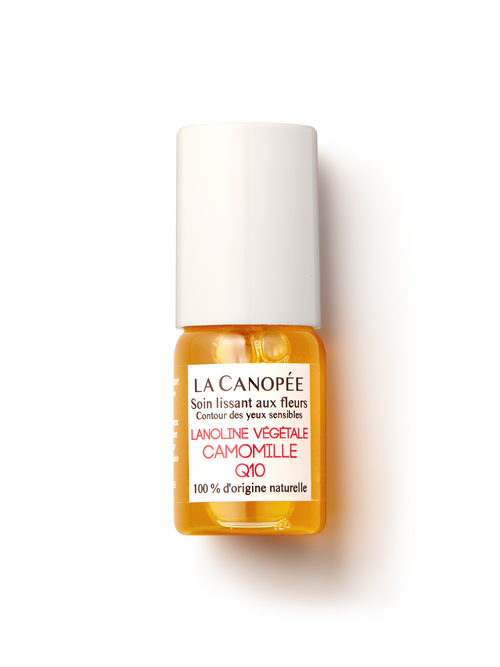
Thus, when Yuka claims an ingredient is of synthetic origin, it is based on an industrial generalization. But at La Canopée, we work with a radically different approach: our formulations are 100% natural in origin, developed according to the principles of green chemistry. Even engineers specializing in conventional formulation do not always master the richness and diversity of the natural materials we use. And that is quite normal: everyone has their own trade.
The real problem is that Yuka applies a simplified, standardized, and sometimes arbitrary grid to judge the quality or "toxicity" of an ingredient. It does not take into account the dosage, the context of use, the synergy of active ingredients, or the specific skin type the product is intended for. An ingredient may be downgraded simply because it contains a molecule that must be disclosed according to regulations, such as linalool or geraniol, without any link to a real risk.
And yet, these natural molecules are there for a good reason: they are active, they have cosmetic properties, and they provide real effectiveness to our skincare. They are living, powerful components that contribute to the beauty and health of the skin.
The perverse effect of marketing:
formulating to please the algorithm
This rating system unfortunately has a perverse effect; it pushes some brands to formulate not for the skin, but for the algorithm. The race for a 100/100 score on Yuka has become a marketing objective in itself, rather than a guarantee of real quality. Formulations are watered down, smoothed out, and stripped of potentially active but poorly rated ingredients. Essential oils are removed, powerful extracts are avoided, and ferments or botanical synergies are suppressed... all to keep only neutral and inert bases.
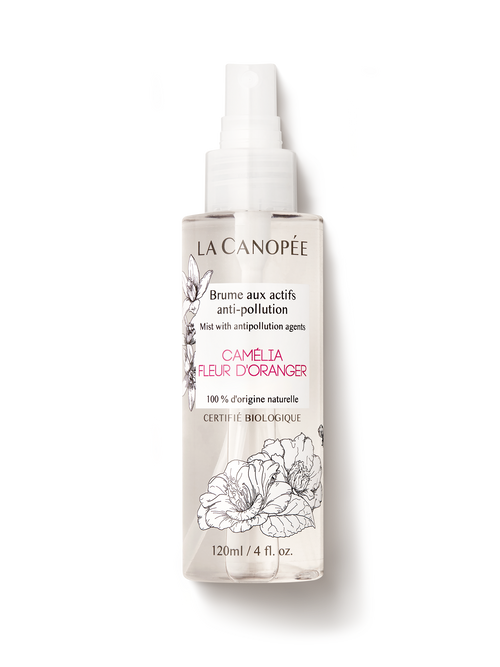
Let's take a concrete example: in our new Ouistiti range dedicated to babies, we formulated a face and body cream based on orange blossom water, recognized for millennia for its soothing virtues.
To get a 100/100 on Yuka, we would have had to use only plain water in the aqueous phase, without active ingredients, without a story, and without effectiveness. It is a total nonsense.
Because a cosmetic without allergens is often a cosmetic without life. The active molecules derived from plants are sometimes classified as regulatory allergens, but that is precisely because they interact with the skin. Wanting to eliminate them is like wanting an infusion without plants or a decaffeinated coffee; the ritual remains, but the effectiveness vanishes.

⚠️ As a reminder, allergens are important to list for those who are allergic to them. It's like the indication of traces of nuts on biscuit packets, but are you going to deprive yourself of those little delights if you are not allergic? No, and you have a good reason!
Evolving regulations... making the race for 100/100 even more absurd
Recently, European cosmetic regulations have evolved. The list of allergens to be reported has grown from 26 to 82. This change aims to strengthen transparency and protect truly allergic consumers, which is obviously a good thing.
But in practical terms, this means that INCI lists will grow longer, and more and more products, especially the most natural ones, will have to define allergens present in trace amounts. As a reminder, an allergen must be reported as soon as it reaches 0.001% of a leave-on product, or 0.01% for a rinse-off product. These are extremely low thresholds.
These are not "new" allergens; these are known molecules naturally present in essential oils, plant extracts, ferments, etc. These are what bring the formulas to life. And yet, on Yuka, their mere presence is enough to lower a score.
This is where the problem becomes glaring; the more brands seek to stay at 100/100, the more active ingredients they must remove, the more they must simplify to the extreme, and the more they offer products that are... empty. Just hot air.
Living cosmetics, not sanitized ones

At La Canopée, we choose the opposite path: offering living, natural, sensory, and truly active cosmetics. Even if it means not pleasing the algorithms. We formulate for the skin, not for the checklists.
We know that regulated allergens are not poisons. Their presence, in low doses, in well-formulated products, is perfectly tolerated by the vast majority of users. It is not their nature that is the problem, but their misinterpretation.
This is exactly what cosmetic rating apps show; some of our skincare products are poorly rated solely because of the presence of a natural allergen. This reveals a deep lack of knowledge about what a plant-based active ingredient is and what natural cosmetics are. And above all, it contributes to an anxiety-inducing atmosphere around beauty, where everything becomes suspect, even the best that nature has to offer us.
A tool, not the truth
The purpose of this article is not to condemn Yuka. The initiative is based on a desire for transparency, and that deserves to be acknowledged. But it must be said clearly: Yuka should not be your only way of judging the quality of a natural cosmetic product.
It is only one indicator among others, with its biases, its simplifications, and its errors. A score on an app cannot replace the expertise of a formulator, the sensoriality of a skincare product, or the real experience of the skin.

At La Canopée, we continue to champion intelligent, committed beauty that is connected to nature. Even if it doesn't suit the algorithms!

Juliette Munoz,
Co-founder, in charge of communication at La Canopée.
✔️ Holds a Master's degree in Design and Environments.
✔️ Certified in aromatherapy.
✔️ Trained in facialist massage and face yoga.
Passionate about skin biology, botany, and holistic beauty, Juliette founded La Canopée in 2017 alongside her sister Cécile, an expert in green chemistry. Driven by a commitment to her customers, Juliette tirelessly pursues excellence in every aspect of La Canopée, aiming to offer the best possible experience with the brand.