














Very fragile adult skin: atopy, treatments, reactivity, and what really helps
My sister and I developed the Ouistiti range after becoming mothers.
We wanted to meet the needs of delicate baby skin, using the best of nature and the best of science. This resulted in five short, simple formulas, designed for the most demanding skin of all: that of a newborn, and subsequently, a child.
We never thought they would one day be used for anything else.
Why trust us:
We have been at the heart of green chemistry innovation for nearly 10 years.
Over 50,000 customers have trusted us from the very beginning on this site, and we can attest to their loyalty.
As enthusiasts, we closely follow all advancements in botany, cosmetics, and also dermatology.
Table of Contents
the same denominator Skin during cancer treatment Atopic dermatitis in adulthood Skin we have weakened ourselves The seven gestures for weakened skin Which care for which need The magic ointment, for areas that crack The melting balm, for large areas and tight skin The baby cream, the everyday care The cleansing jelly, so that showering stops being a problem In summary Weakened skin routine ❤️🩹
Then illness entered the family
Last year, one of our relatives was affected by cancer. We had to respond with chemotherapy, like thousands of people in France every year.
The side effects of such a treatment can be severe, both for the body and the skin. In every family, there is always someone whose job it is to know about medication, administration, or cooking. In ours, the cosmetics are our job. So we looked for what could support their skin on a daily basis, without ever interfering with their treatments.
Then, after checking what was on the market and reading the compositions of the samples our relative received at the hospital, the solution became obvious: the Ouistiti range.

A children's range is the most suitable
The intuition was simple: a product designed for the most delicate skin should be suitable for skin that has become fragile.
So we went to read the reference texts, the recommendations from French dermatologists on atopic dermatitis, the guidelines from the Francophone Association for Supportive Oncological Care, and patient booklets from cancer centers. We were looking for exactly what they require for skin undergoing treatment.
And there, our intuition was confirmed. It’s not just that our formulas "could be suitable." It’s that the recommendations for atopic skin and those for skin under treatment call for exactly the same thing: gentle cleansing at the right pH, a daily and generous emollient, no fragrance or alcohol, no exfoliation, and high photoprotection.
There is a reason for this: a damaged skin barrier is a damaged skin barrier, quite simply. What caused the damage (a filaggrin mutation, chemotherapy, radiation fields, or years of overly harsh products) changes the diagnosis, prognosis, and medical treatment. It changes almost nothing about what the skin needs on the surface to cope.
Then our customers told us the same thing
We started talking about it to those of our customers who were going through the same ordeal. The feedback was the same as in our family: more comfortable skin, less tightness, and products that were finally tolerable.
This feedback touches us, and it has shaped this article.
With a rule that we impose on ourselves right from the start: a cosmetic product cures nothing; it supports treatments and in no way replaces medical treatment. That being said, let's go into the details.
What is "severely weakened" skin?
Short answer: skin whose barrier is no longer performing its role; it lets water out and irritants in.

The wall, the cement, and the mantle
The outermost layer of the skin acts like a wall, with flattened cells called corneocytes (the bricks), held together by a lipid cement composed of ceramides, cholesterol, and free fatty acids. Inside the bricks, a natural moisturizing factor retains water. On the surface, an acid mantle (in adults, a pH around 5 to 5.5) helps defend against undesirable bacteria and supports the proper functioning of the enzymes that cement the whole structure.
When this wall is intact, you don't notice it. When it is damaged, it becomes visible: the skin feels tight, red, itchy, reacts to products it tolerated the day before, and takes much longer than usual to return to normal.
The measurement that sums it all up
Transepidermal water loss (TEWL) quantifies the water that evaporates through the skin. It is the reference indicator for the integrity of the barrier and appears in almost all serious studies in the field.
A high TEWL means a leaky barrier. And a leaky barrier is also one that lets in allergens, irritants, or even microorganisms. The two go hand in hand.
A useful detail for the rest of this: this TEWL follows a circadian rhythm. It is higher in the evening and at night than in the morning, peaking around 3:00 AM. This is the most solid physiological argument in favor of applying a nourishing treatment in the evening.
The causes of weakened skin
The causes of a damaged barrier are very different from one another, and they involve unrelated medical treatments. But the surface result is very similar: dryness, tightness, reactivity, discomfort, and sometimes redness and itching.
Three main situations,
one common denominator
Skin during cancer treatment
This is the situation that led us to address this topic. It is also the one that is discussed the least, and often the one that weighs most heavily on daily life because it is visible.
The common thread for all these effects can be summed up in one sentence: anticancer treatments target cells that divide rapidly, and the skin, mucous membranes, hair, and nails are precisely tissues with rapid renewal. They take a hit, therefore, regardless of the protocol. Here is an overview, all treatments combined.

Once all these observations are made, our only goal in cosmetics is to support so that people can regain comfort in their daily lives during treatment periods, never to replace medical care.
Atopic dermatitis in adulthood
We often forget that atopic dermatitis does not end in childhood. In France, it affects 4 to 5% of adults. According to French sources, between 10 and 15% of childhood forms persist into adulthood, and 5% are still present after the age of twenty.
In terms of mechanism, the most well-established element is the role of filaggrin, a key protein of the stratum corneum. About 10% of Europeans carry a mutation that reduces its production by half, and among these carriers in Northern Europe, 42% develop atopic dermatitis. Faulty filaggrin means more water escapes, fewer ceramides, and a barrier that lets more allergens through.

The 2023 recommendations from the French Society of Dermatology are unambiguous: “We recommend the daily use of emollients as a background treatment”; this is a strong recommendation, with a reference quantity of about 250 g per week for an adult. Most people apply much less. They also suggest adapting the texture to the season: rather a lotion or cream in summer, rather a balm in winter.
And they add a decisive sentence for anyone who formulates cosmetics: “Only emollient preparations free of protein allergens or haptens known to cause contact allergies should be used.”
Skin we have weakened ourselves
This is the third scenario, the most common, and the one we talk about most lightly.
A barrier doesn't just degrade under the effect of a disease or treatment. It also degrades through the use of cleansers that are too harsh, alcoholic lotions, scrubs that are too frequent, stacked active ingredients, or scalding water. In fact, French recommendations on acne explicitly label alcohol-based products as “ineffective and irritating and/or sensitizing.”
The sun also plays a part, and not just in the long term; studies published on the subject show that sun exposure measurably reduces the skin's barrier function and increases transepidermal water loss. Skin exposed without protection is not just skin that will age faster; it is skin that, right now, retains water less effectively.
And there is a hidden cost, rarely mentioned: once contact sensitization is established, it is lasting. It is not just money spent for nothing; it is sometimes an ingredient that can never be used again.
The seven steps for weakened skin
And now that we have said that, how do you take care of weakened skin?
Short answer: cleanse without stripping, nourish generously, and spare it everything else.
This is where our intuition became an observation. When you put side-by-side what French dermatologists recommend for atopic skin and what oncology standards require for skin undergoing treatment, you end up with the same list. Seven steps, and practically no divergence between the two worlds.
Here they are, in the order we perform them.
1. Lukewarm water, and a short shower. Five minutes are enough. Hot water is the most common and effective enemy of the lipid barrier. It dissolves the very cement we are trying to preserve. It is the step that costs nothing and changes things the fastest.
2. A soap-free cleanser at the skin's pH. French dermatologists ask for a cleansing product free of allergens and irritants with a pH between 5 and 6; oncology standards require a syndet or a lipid-replenishing cleanser free of perfume and alcohol. In both cases, Marseille soap, standard soap bars, and shower gels with high foaming agent content that leave the skin feeling tight are avoided. This sensation is not a sign of clean skin; it is a sign of stripped skin.
3. Dry by patting, never by rubbing. And emphasize the skin folds. This is the most underestimated step of the entire routine, and the most important one for irradiated skin.
4. A nourishing treatment every day, much more than you think. This is the central step, and the one we do least well. The reference quantity cited for an atopic adult is about 250 g of emollient per week. Most people are far from this amount, and this is one of the most frequent causes of failure for an otherwise well-chosen routine. Adapt the texture to the season: more fluid when it is hot, richer when it is cold.
5. No perfume, no alcohol. Oncology standards explicitly require this, and recommendations on atopic dermatitis speak of preparations free of known contact allergens. On weakened skin, these ingredients should be avoided as much as possible. The goal is to purify and limit the risks of intolerance as much as possible.
6. Put away the scrubs. Peels, exfoliants, clay masks, brushes—anything that strips should be set aside until the skin has repaired itself. Saunas and steam rooms are also forbidden.
7. And protect from the sun, for a long time. SPF 50+ UVA/UVB during treatment and the year that follows, and for life on an irradiated area. Clothing remains the best protection: “You will never be as well protected as by loose, dark-colored cotton clothing,” and for exposed parts of the body, a natural sunscreen is most recommended.
Seven steps, and one logic: cleanse the skin without stripping it, return lipids to it, and spare it the rest.
This is also the reason why a range designed for the most demanding skin of all, that of babies, ended up in the hands of adults who were not its intended audience.
Which treatment for which need
Four treatments, four distinct issues for weakened skin.
The seven steps above say what to do. Here is with what, and especially why. Each of these treatments responds to a specific situation and none replaces the other three.

The magic ointment, for areas that crack
This is the SOS treatment, the one you apply in a generous layer on a specific area: hands that are cracking, lips, the corners of the nose, a fold that is turning red, damaged heels.
What it provides. A botanical lanolin, along with oleic, linoleic, and linolenic polyglycerides, forms a breathable film on the surface that locks in moisture while allowing the skin to function underneath. This is exactly what a very dry area needs: less water escaping, and protection against friction. Underneath, organic virgin olive oil and camelina oil, rich in omega-3s, nourish and soften. The calendula, in the form of a CO2 extract, is dosed at 1%, where the market standard usually sits between 0.1 and 0.3%.

Why it is suitable for very fragile skin. Its list consists of nine ingredients. It is anhydrous, water-free, and therefore contains no preservatives, removing one more risky ingredient. It contains no mandatory labeling fragrance allergens, no added fragrance, and no essential oils. And its botanical lanolin is not actual lanolin. Animal lanolin is a documented contact allergen, frequently found in people who apply many topical products. We keep the benefits and remove the allergic history.
Of the entire range, this is the formula closest to what is required by oncological standards. Among a panel of 20 testers, 90% observed a reduction in redness, a test that indicates a very encouraging level of tolerance and user experience.
The melting balm, for large areas
and tight skin
For when it’s not just one zone, but an entire leg, back, or abdomen. Skin that feels tight, itchy, and "catches" under your fingers.
What it provides. An organic virgin olive oil macerate deeply nourishes, while sumac and candelilla plant waxes deposit a protective film that slows evaporation—step 4 of the seven, applied on a large scale. Its texture melts upon contact with the skin, which is important when applying it daily over large areas; a balm you don't want to spread is a balm you won't apply.

Why it is suitable. Ten ingredients, also anhydrous, and therefore preservative-free. Among 20 testers, 95% found that it soothed sensitive skin and itching. It is also the go-to care for tight skin during pregnancy, which is what it was originally designed for.
This is the formula with the highest content of aromatic compounds in the range; three mandatory labeling allergens are present: linalool, linalyl acetate, and beta-caryophyllene, all derived from lavender macerate.
What does this mean? On atopic skin with no known lavender allergy, this is not an obstacle. On a zone undergoing irradiation, where standards demand absolute zero, the Magic Ointment is the right choice.
The baby cream, for everyday care
This is the one that addresses the most important step: nourishing the skin every day, generously. The 250g per week recommended for an atopic adult is achieved with this type of texture.
What it provides:
Its aqueous phase is enriched with rehydrated opuntia juice and wild fine lavender hydrosol, both moisturizing and soothing. Glycerin attracts and holds water in the upper layers, while organic virgin olive oil and organic virgin coconut oil provide the lipids that prevent it from leaving. Added to this are postbiotics, which support the balance of the skin microbiota, a soothing oat extract, and an opuntia extract. It is the classic and effective combination of a good emollient, water, and then something to keep it in.

Why it is suitable. Its texture absorbs quickly while leaving a nourishing film, making it suitable for both face and body, morning and evening. The emulsifiers are fatty alcohols and a glucoside—no PEGs or silicones. Only one mandatory labeling allergen is present: linalool, which was not added but comes from the lavender hydrosol. Its mention at the end of the INCI list is a transparency requirement, so that sensitive individuals can identify it.
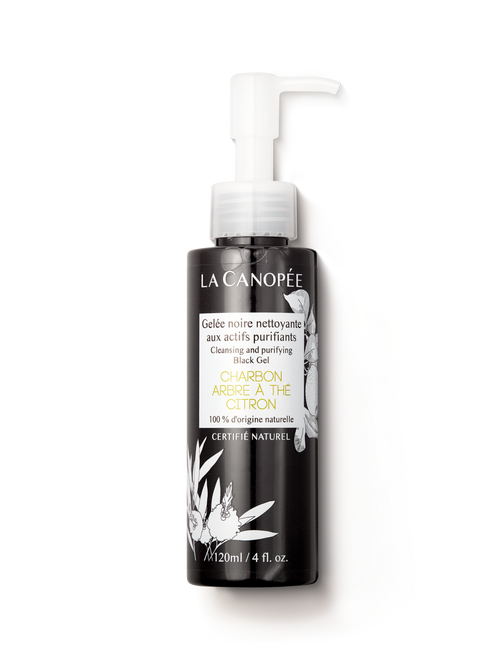
The washing jelly, so that the shower
stops being the problem
This is step 2, and it is often where everything is decided; a cleanser that is too harsh undoes each day what the nourishing care built the day before.
What it provides. Its surfactants are decyl glucoside and glycolipids, which are non-ionic surfactants—exactly the family that international consensus recommends, while avoiding anionic surfactants and sodium lauryl sulfate. Glycerin hydrates during washing, organic virgin olive oil and oat extract limit the feeling of tightness, and the pH is adjusted with lactic acid to respect the acid mantle.

Why it is suitable. No sulfates, no cocamidopropyl betaine—the most common surfactant in gentle cleansers and the most frequently found contact allergen in a meta-analysis of 11,593 children tested in allergology. And no mandatory labeling fragrance allergens; the vanilla note comes from bio-fermented vanillin, which is not on the list of substances requiring mandatory declaration.
In summary
Fragile skin is a barrier that no longer holds; water escapes, irritants enter, and everything that was previously tolerated suddenly becomes unbearable. Whether this barrier has been weakened by a filaggrin mutation, chemotherapy, radiation therapy, or years of overly harsh products, the surface needs are almost identical.
This is what the superposition of recommendations shows: cleanse without stripping, using a product with the right pH; shower briefly with lukewarm water; dry by patting; apply an emollient every day, generously (250g per week, much more than we are used to); avoid fragrance, alcohol, exfoliation, and heat; and protect from the sun.
This is why a range created for babies ended up, first in our own family and then among our customers, in the hands of adults who were not its intended audience. And when you compare the INCI lists with these recommendations, the intuition is confirmed, as there is no fragrance, no methylisothiazolinone, no phenoxyethanol, no sulfate, no cocamidopropyl betaine, and no animal-derived lanolin. The "magic ointment" goes even further: nine ingredients, anhydrous, preservative-free, and with no mandatory labeling allergens.
Our skincare products are 100% natural, 100% vegan, and made in Grasse. We remain available if you need advice on choosing your cosmetics.
Can an adult use skincare products designed for babies?
Yes, and it is even logical. Formulas designed for the most reactive skin possible meet the same requirements as those recommended for weakened adult skin. Gentle cleansing with the correct pH, daily emollient, and limiting known contact allergens. Simply check the allergens mentioned at the end of the INCI list if you have any intolerances.
Which products should be prioritized during chemotherapy or radiotherapy?
French guidelines recommend hypoallergenic, fragrance-free, alcohol-free products, of the "dry and sensitive skin" type, while avoiding peels, scrubs, and clay masks, and maintaining SPF 50+ photoprotection during treatment and for the following year. We therefore recommend our vanilla flower cleansing jelly, the baby cream, the magic ointment, and the mother-baby massage balm.
Can you apply cream before a radiotherapy session?
The 2025 European recommendations indicate that a moisturizing cream can be applied just before the session, and the reference dosimetric work shows that a thin to moderate layer does not modify the dose received. The French patient page still says the opposite. In practice, the instructions from your department are definitive.
What amount of cream should you really apply?
Much more than one might think. The reference cited by French recommendations for an atopic adult is approximately 250g per week, in one to two applications per day. Most people use far less, and this is one of the most frequent causes of failure for a well-prescribed background treatment.
What does "hypoallergenic" mean on packaging?
Nothing regulated in the strict sense, which is precisely why it is better to read the INCI list than the packaging. Three concrete checks, in order: fragrance allergens mentioned at the end of the list (linalool, limonene, geraniol, citral…), the preservative—methylisothiazolinone is among the most frequent contact allergens; and, in a washing product, the surfactant—cocamidopropyl betaine ranks even higher in this classification.
Is a hydrosol the same thing as an essential oil?
No. A hydrosol is the distillation water of a plant; it contains a very diluted fraction of aromatic compounds, whereas an essential oil is the concentrated extract. A macerate falls somewhere in between.
Should essential oils be avoided on weakened skin?
On very reactive skin, it is better to do without them. There is no global European ban, but patient booklets from cancer centers explicitly advise against pure essential oils and heavily scented creams.
Routine for weakened skin ❤️🩹

Juliette Munoz,
Co-founder, in charge of communication at La Canopée.
✔️ Holds a Master's degree in design and environments.
✔️ Certified in aromatherapy.
✔️ Trained in facialist face massage and face yoga.
Passionate about skin biology, botany, and holistic beauty, Juliette founded La Canopée in 2017 alongside her sister Cécile, an expert in green chemistry. Driven by a commitment to her customers, Juliette tirelessly pursues excellence in all aspects of La Canopée, aiming to offer the best possible experience with the brand.