














La Canopée loves allergens and you should too!
La Canopée loves allergens, and you should too!
In the world of beauty, one term seems to spark concern: allergens!
Unfortunately perceived as substances to be avoided at all costs, allergens of natural origin can play an essential role in the efficacy of cosmetic products. In this article, we only address the case of allergens of natural origin because that is our specialty; we are by no means making a generalization by including synthetic allergens, about which we know very little.
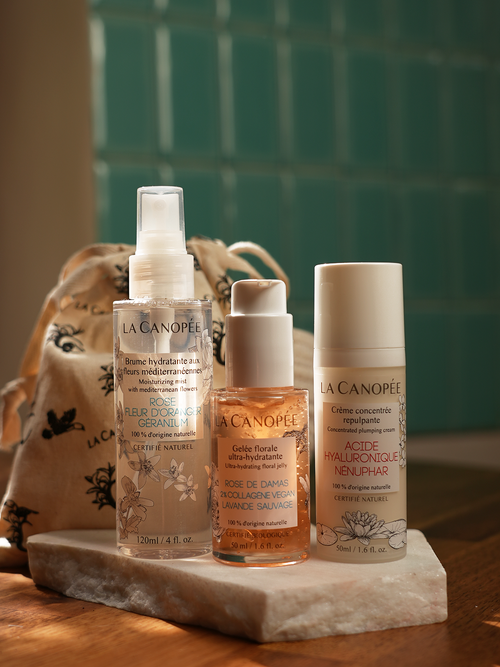
As a reminder, La Canopée only offers cosmetic care that is 100% natural in origin and 100% vegan; we are experts in green chemistry.
Why are we talking more and more about allergens? Why is it absolutely necessary to nuance our view of allergens? We tell you everything!
Why trust us:
We have been at the heart of green chemistry innovation for nearly 10 years.
Over 50,000 customers have trusted us from the start on this site and show us their loyalty.
As passionate individuals, we closely follow all advances in botany, cosmetics, and also dermatology.
Understanding allergens in cosmetics:
For many, the term "allergen" immediately evokes undesirable skin reactions. Allergens can trigger allergies or intolerances in some people because they are active molecules present in certain raw materials used in cosmetics. In fact, cosmetic regulations require that manufacturers label the presence of potential allergens, even at very low concentrations, in order to protect sensitive consumers.
It is quite like seeing "May contain traces of nuts" written on a package of cookies. It is crucial to report it to the people concerned; however, it should not alarm other consumers who would have no problem with nuts—quite the contrary, they would enjoy them.

It is the same in cosmetics. We expect our skincare products to act on a certain skin problem, and they can do so because they are loaded with active molecules! Not all active ingredients in cosmetics are classified as allergens, of course, but conversely, all allergens are interesting active ingredients, at least in our formulations. If an active molecule seems harmful to us, it is discarded; this is what happens, for example, with the furocoumarins contained in lemon essential oil. These molecules are photosensitizing, so we select an essential oil without furocoumarins (called "defurocoumarinized" for Scrabble lovers😉) so as not to risk skin problems.

Nature is full of active molecules:
Contrary to common perception, many allergens of natural origin are actually active molecules that are beneficial to the skin. For example, limonene, a common allergen found in citrus fruits, is also a powerful antibacterial and antioxidant agent. Similarly, linalool, another frequent allergen found in lavender, has soothing and healing properties. Thus, instead of fearing them, these allergens can contribute to the efficacy of cosmetic products by providing their natural benefits to the skin.
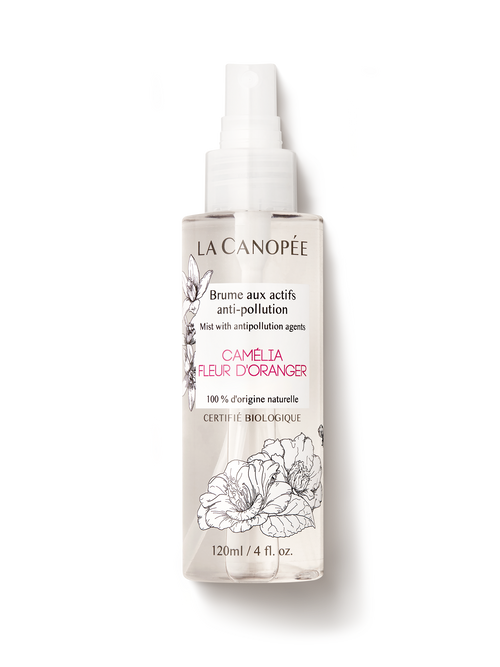
Here is an anecdote that led us to write this article. The term "allergen" is "so scary" that an analysis laboratory once advised us to remove orange blossom hydrosol from one of our cosmetics to put only... water!
It is obviously a mistake to give in to panic at the term "allergen" when one comes to think that even orange blossom water, which has soothing and calming properties, should be removed from our formulas. We are warning that natural cosmetics could become impoverished due to the bad press about allergens and that some brands that will rush into this anxiety-inducing "allergen-free" gap will only end up selling water to their customers.
At La Canopée, we want and need to make it understood that, yes, nature can be very powerful, but that is where our core business lies: the knowledge of raw materials and green chemistry. This is what makes us affirm that we love allergens and that you should too! But I am sure that after reading this article, you will agree with us.
Cosmetic regulations and allergens:
Recently, cosmetic regulations expanded the list of allergens, moving from 26 to 82 allergens to be reported. INCI lists from brands will therefore get longer.
An allergen must be reported in a cosmetic as soon as it reaches 0.001% of the formula for a leave-on product and 0.01% for a rinse-off product.
These are not new allergens, but after study by the European Scientific Committee on Consumer Safety, it emerged that the precautionary principle should be applied in order to warn the concerned consumers. This is a step in the right direction for the health of allergic individuals. But it seems important to us to understand that the presence of an allergen in a cosmetic product does not mean beforehand that it will cause undesirable reactions in everyone.
This is, incidentally, the same problem with apps that rate cosmetics. Some of our skincare products are poorly rated just because of the presence of allergens. This clearly shows their lack of knowledge about the nature of allergens and what natural cosmetics are. Unfortunately, this type of actor contributes to the anxiety-inducing aspect of this subject because users trust their "judgment," except that one cannot reasonably rate a natural allergen in the same way as a substance that would be truly harmful. Yet, this is the case, and users, unless they are specialists, cannot tell the difference.
Description of an INCI list and its allergens:
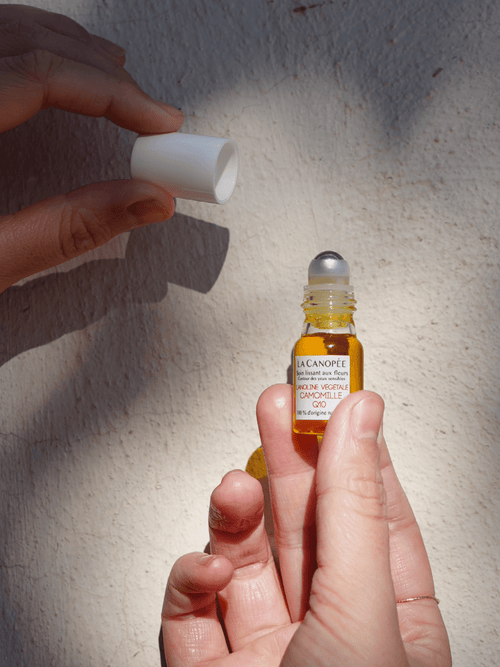
For example, in our sun concentrate serum, which is a very powerful skincare product loaded with active ingredients, there are several allergens at the end of the INCI list: farnesol, geraniol, limonene, Benzyl Salicylate, Benzyl Benzoate, and linalool. Here are their properties and benefits for the skin:
- Farnesol, found in various essential oils, is valued for its antibacterial and anti-inflammatory properties, making it a precious ingredient in skincare products to fight acne and skin inflammation.
- Geraniol, found in abundance in geranium and rose essential oils, offers soothing and regenerating benefits for the skin, promoting a more radiant appearance and a softer texture.
- Limonene, extracted mainly from citrus fruits, is widely used for its refreshing and invigorating fragrance, as well as for its antioxidant and toning properties.
- Benzyl salicylate is widely used in cosmetics for its pleasant and floral scent. In addition to its delicate fragrance, benzyl salicylate offers softening properties for the skin, helping to maintain its hydration and suppleness.
- Benzyl benzoate is valued for its sweet and warm fragrance. In addition to its pleasant scent, benzyl benzoate possesses antimicrobial and antifungal properties, making it a useful ingredient in skincare products to help fight skin infections and maintain healthy skin.
- As for linalool, it is renowned for its calming and healing properties, helping to soothe skin irritation and promote cellular regeneration. These allergens, although potentially sensitizing for some people, are also precious ingredients in natural cosmetic products, offering a multitude of benefits for the skin.
The efficacy of natural and vegan cosmetics
Natural and vegan cosmetics offer a precious alternative to conventional products loaded with synthetic and petrochemical-derived chemicals. By using plant-based ingredients, these products can offer equivalent, and even superior, efficacy while respecting the health of the skin and the environment. La Canopée masters botany, aromatherapy, and phytotherapy and can therefore formulate products that fully exploit the benefits of allergens and other active molecules, thus offering ethical and sustainable beauty.

Conclusion
In conclusion, it is time to change our perception of naturally derived allergens in cosmetics. Rather than fearing them, we should view them as allies in our quest for healthy, radiant skin. By understanding their true nature and using common sense in our product choices, we can fully enjoy the benefits of natural and vegan cosmetics while minimizing potential risks. It is time to de-dramatize naturally derived allergens and welcome them as essential actors in our beauty routine.

Juliette Munoz,
Co-founder, in charge of communications at La Canopée.
✔️ Holds a Master's degree in Design and Environments.
✔️ Certified in Aromatherapy.
✔️ Trained in facial massage and face yoga.
Passionate about skin biology, botany, and holistic beauty, Juliette founded La Canopée in 2017 alongside her sister Cécile, an expert in green chemistry. Driven by a commitment to her customers, Juliette tirelessly pursues excellence in all aspects of La Canopée, aiming to provide the best possible experience with the brand.